
Is a GPS Jammer Less Effective Against Devices That Support Multiple Satellite Navigation Systems?
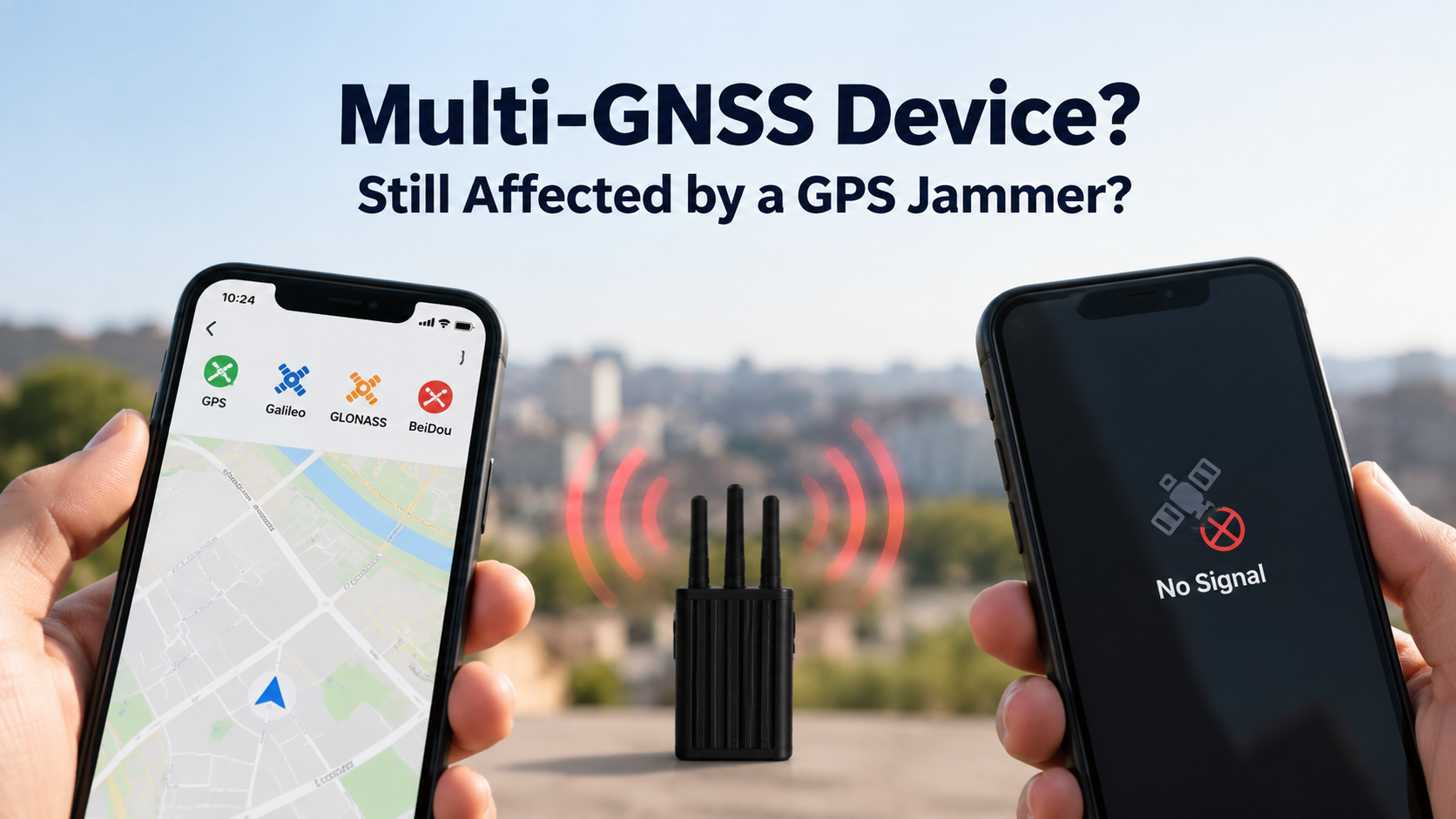
A device that supports GPS, Galileo, GLONASS and BeiDou has more satellite navigation options than one relying on GPS alone. But does that make it harder for a GPS jammer to disrupt its positioning?
Not necessarily. Supporting more satellite systems does not automatically make a device resistant to GPS jamming. What matters is how the receiver handles the signals it can actually use.
More Satellite Systems, But No Guarantee
Multi-GNSS receivers can use satellites from several constellations to improve positioning availability, particularly in cities where buildings block parts of the sky.
But GPS, Galileo, GLONASS and BeiDou all depend on radio signals reaching the receiver. If interference makes enough of those signals unusable, access to more constellations may not prevent a loss of position.
In other words, four supported satellite systems do not mean four independent layers of protection against a GPS jammer.
The Receiver Matters More Than the List of Systems
A product may advertise support for four GNSS constellations, but that specification alone says little about its performance under interference.
The receiver's chipset, antenna, supported frequencies and signal-processing capabilities all affect how well it maintains a position fix. Some devices can also detect interference or use dedicated mitigation techniques; others offer fewer safeguards.
Multi-frequency reception can improve positioning in certain conditions, but it does not guarantee immunity to jamming either.
The key difference is between supporting multiple satellite systems and being designed to cope with interference. They are not the same thing.
Why a Device May Still Lose Its Position?
A car tracker may suddenly stop updating its location even though it supports several satellite systems. That does not, by itself, prove that a Anti GPS Tracking jammer is nearby.
Poor satellite visibility, antenna problems, buildings and radio interference can all affect GNSS reception. The same symptom can have different causes, so the device's specifications and actual operating conditions matter.
For buyers, it makes more sense to check whether a receiver offers interference detection, signal-quality monitoring and other positioning options than to judge it by the number of supported constellations alone.
Does Multi-GNSS Make GPS Jamming More Difficult?
Not by itself. Support for GPS, Galileo, GLONASS and BeiDou can improve positioning availability, but it does not guarantee protection against a GPS tracker jammer.
A receiver's real-world performance depends on its design, signal reception and ability to handle interference. When comparing navigation devices or GPS trackers, look beyond the constellation list. More satellite options are useful, but they are not a substitute for proper interference mitigation.
