
Why Consumer Drones Are So Easy to Jam — And How Portable Signal Jammers Exploit That Weakness
Modern drones may look futuristic, but under the hood, they often rely on basic, unprotected radio links — and that's where their biggest weakness lies.
Most commercial UAVs, even from top brands, transmit data over 2.4 GHz and 5.8 GHz ISM bands — the same frequencies used by your home Wi-Fi and Bluetooth devices. What does this mean?
It means anyone with a well-calibrated signal jammer can silence a drone with minimal effort — no hacking required, no access needed.
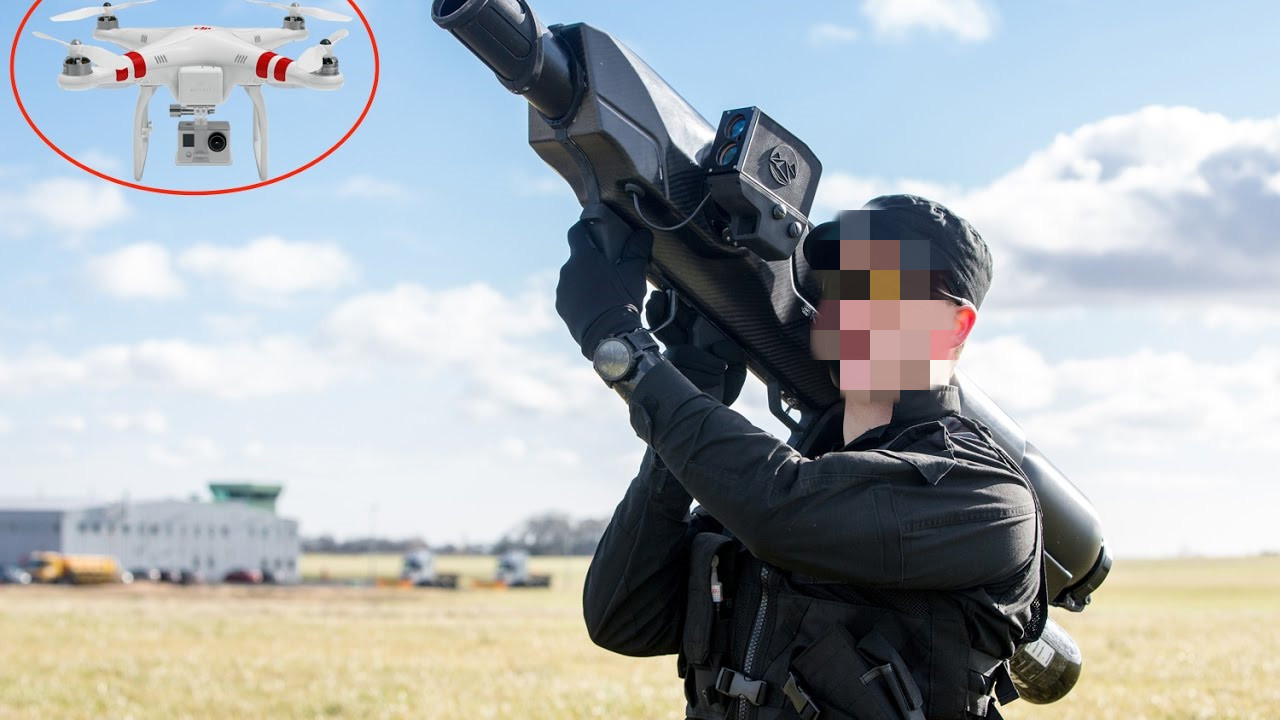
How Portable Drone Jammers Exploit Frequency Dependence ?
Most consumer drones communicate using:
- 2.4GHz / 5.8GHz for remote control and video transmission
- GPS L1 (1.575 GHz) for positioning and flight stability
These signals are non-encrypted and persistent, making them easy to detect and disrupt.
Handheld jammers don't need to “hack” the drone. It simply overwhelms these frequencies with high-power noise or false signals.
Depending on the jamming mode, it can either:
- Cut the pilot's control
- Disrupt the drone's GPS lock
- Force an emergency landing or return-to-home
Types of Jamming in Practice
🔹 Barrage Mode:
Floods multiple drone frequencies simultaneously. This is ideal for environments where many drone models may appear.
🔹 Directional Mode (Jammer Gun):
Allows precise targeting of a single drone using high-gain antennas, minimizing collateral signal interference.
🔹 GPS Disruption Only:
For stealth scenarios where cutting video/control is unnecessary, disabling GPS alone is enough to confuse the drone's auto-stabilization.
These strategies are commonly used not only by military or law enforcement, but increasingly by private users, stadiums, airports, and event organizers protecting airspace.
Why Most Drones Can't Fight Back ?
Despite the growing drone industry, anti-jamming capabilities remain weak in most consumer models.
- No frequency hopping
- No signal redundancy
- No fallback encryption
Even high-end drones rarely offer anti-interference shielding. Manufacturers prioritize lightweight design and camera quality over resilience to signal disruption.
This creates a massive opportunity for those who need portable, affordable airspace control.
Real-World Applications for Portable Drone Jammers
Forget theoretical use cases. Here's where these devices are actually deployed:
| Use Case | Why Jamming Works |
|---|
| 🔐 Private Villas & Estates | Stops drone-based spying and voyeurism instantly. |
| 🏟️ Stadiums / Events | Prevents aerial livestreaming, crowd mapping, or unsafe overflights. |
| 🚔 Police Operations | Blocks surveillance drones during raids or arrests. |
| 🛑 Critical Infrastructure | Shields sensitive zones like power plants, oil fields, and border zones. |
| 🚗 VIP Convoys | Mobile jammers create moving no-fly zones against hostile drones. |
Choosing the Right Jammer: What Actually Matters
Don't be misled by wattage alone. A practical drone jammer needs:
Targeted frequency support (2.4 / 5.8 / GPS L1)
Stable output power, not just peak bursts
Directional or omni coverage depending on use
Battery autonomy of 30–90 minutes for portable use
Cooling system to prevent shutdowns during operation
Some of the best designs are modeled after tactical rifles or compact signal shields, offering mobility without compromising range (100–2000 meters depending on model).
Still Seeing Uninvited Drones?
If drones are hovering over your property or filming without consent, you're not powerless.
With a reliable, legal-use portable signal jammer, you can:
Reclaim your airspace
Prevent real-time video transmission
Force rogue UAVs to land or retreat
Our professional-grade drone jamming devices are field-tested, discreetly designed, and custom-tuned to block all major UAV frequencies.
Explore our full jammer collection
Need help choosing? Contact our RF specialists
The War Is in the Airwaves
You don’t need an EMP or military radar to disable a drone. You just need to understand one thing:
"The sky may be open — but its signals are fragile."
With the right knowledge and tools, control is back in your hands.
