
Common-Misconceptions About Cell Phone Jammers
When it comes to cell Jammers, many people still have misconceptions that can lead to poor buying decisions or unrealistic expectations. To help you better understand how these devices actually work, let's break down some of the most common myths and expand on the factors that truly affect performance.
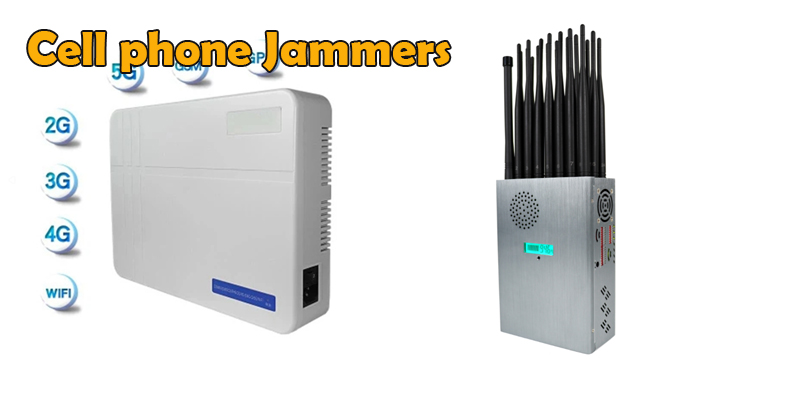
1. More Antennas Do Not Mean More Power
A common misunderstanding is that the more antennas a jammer has, the stronger it is. In reality, the number of antennas mainly determines the range of frequency bands it can block—not the actual power output.
- Channel Output Power Matters: Even with multiple antennas, weak channel power results in limited blocking distance.
- Environment Plays a Role: Walls, building density, and terrain all affect effectiveness.
- Omnidirectional vs. Directional Antennas: Omnidirectional antennas cover wider areas but with less penetration, while directional antennas concentrate energy in one direction for longer blocking range.
2. Desktop Jammers vs. Portable Jammers
At the same price point, desktop Jamming devices generally provide a wider interference range than portable models.
- Why? Desktop devices have stable power supplies and better cooling systems, allowing for stronger and more consistent output.
- Portable Advantages: Lightweight and convenient, portable models are suitable for temporary or personal use, such as exams, small meetings, or field operations.
- Buying Tip: Choose based on your actual usage scenario instead of judging by size or price alone.
3. The Advantage of Directional Antennas
When comparing devices at the same price, directional antenna jammers typically achieve longer blocking distances.
- How They Work: Energy is concentrated in one direction rather than dispersed all around.
- Ideal Scenarios: Locations where interference is required in a specific zone.
- Limitation: Narrow coverage means that precise alignment is necessary to avoid blind spots.
4. Built-in Antenna Jammers Have Shorter Range
Another overlooked fact is that jammers with built-in antennas usually have a shorter interference range compared to external antenna models.
- Reason: Built-in antennas are compact and convenient but sacrifice performance due to smaller size and lower gain.
- Best Use Case: Small rooms or controlled spaces where portability and discreet design are more important than long-range blocking.
5. Frequency Control With DIP Switches
Some mobile networks jammers are equipped with DIP switches that allow you to turn certain frequency bands on or off.
- How It Helps: If you disable one or more frequency bands, the remaining active bands can operate with greater effective blocking distance.
- Why? Power is no longer distributed across all channels, so more output is concentrated on the selected frequencies.
- Practical Use: Useful when you only need to block specific signals such as 4G LTE or 5G while leaving others unaffected.
6. U.S. Cell Phone Frequencies Are Not Limited to 617–652 MHz
Cell phone signals in the U.S. are spread across multiple frequency bands—not just the 617–652 MHz range.
Key Frequency Ranges:
617–652 MHz (low band, wide coverage)
3600–3900 MHz (important 5G band)
Why It Matters: With the rapid development of 5G and future 6G networks, frequency ranges will continue to expand, and jammers must keep pace with these updates.
The performance of any Mobile cell blockers depends on output power, antenna type, frequency coverage, and environment. More antennas do not guarantee better range, and built-in antennas usually limit performance. By understanding these factors, buyers can choose the best cell phone jammer for office, classroom, or personal security without falling for common myths.
